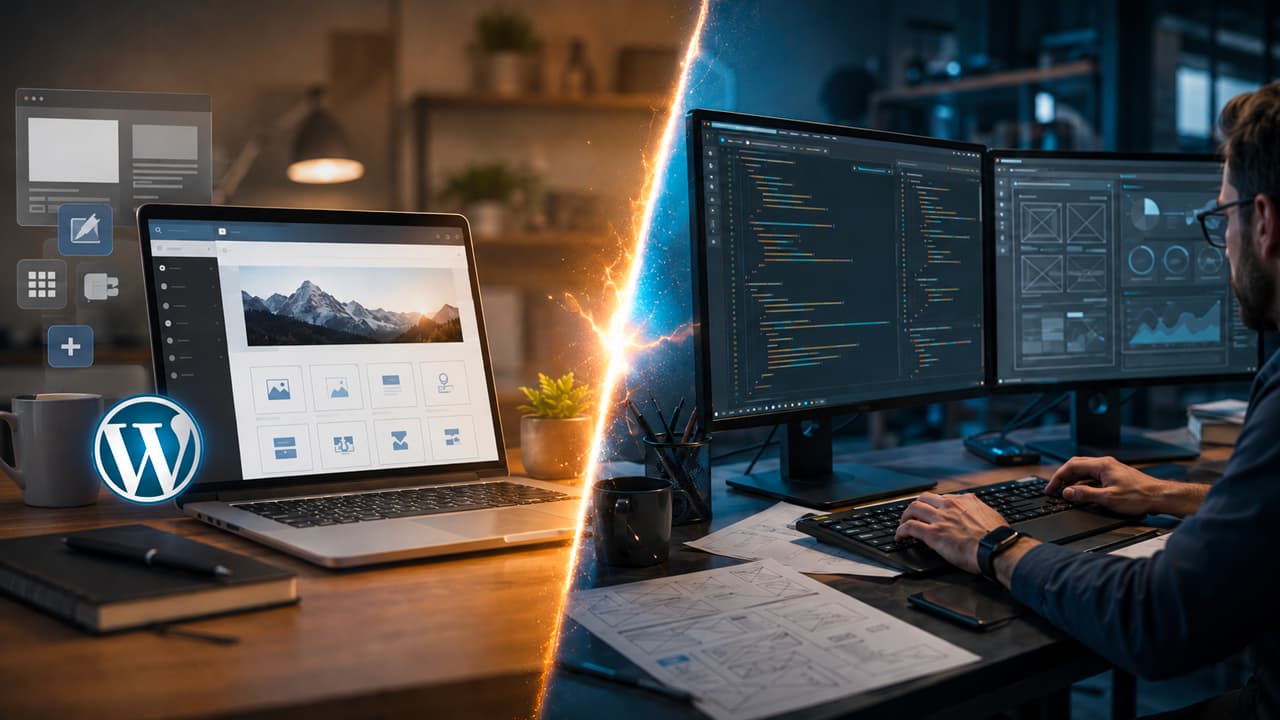
This question comes up in nearly every first conversation with a new client, usually phrased as "should we just use WordPress, or do we need something custom?" It's a fair question, and the honest answer is: it depends on what you're actually trying to do — not on which option sounds more impressive in a pitch.
What WordPress is actually good at
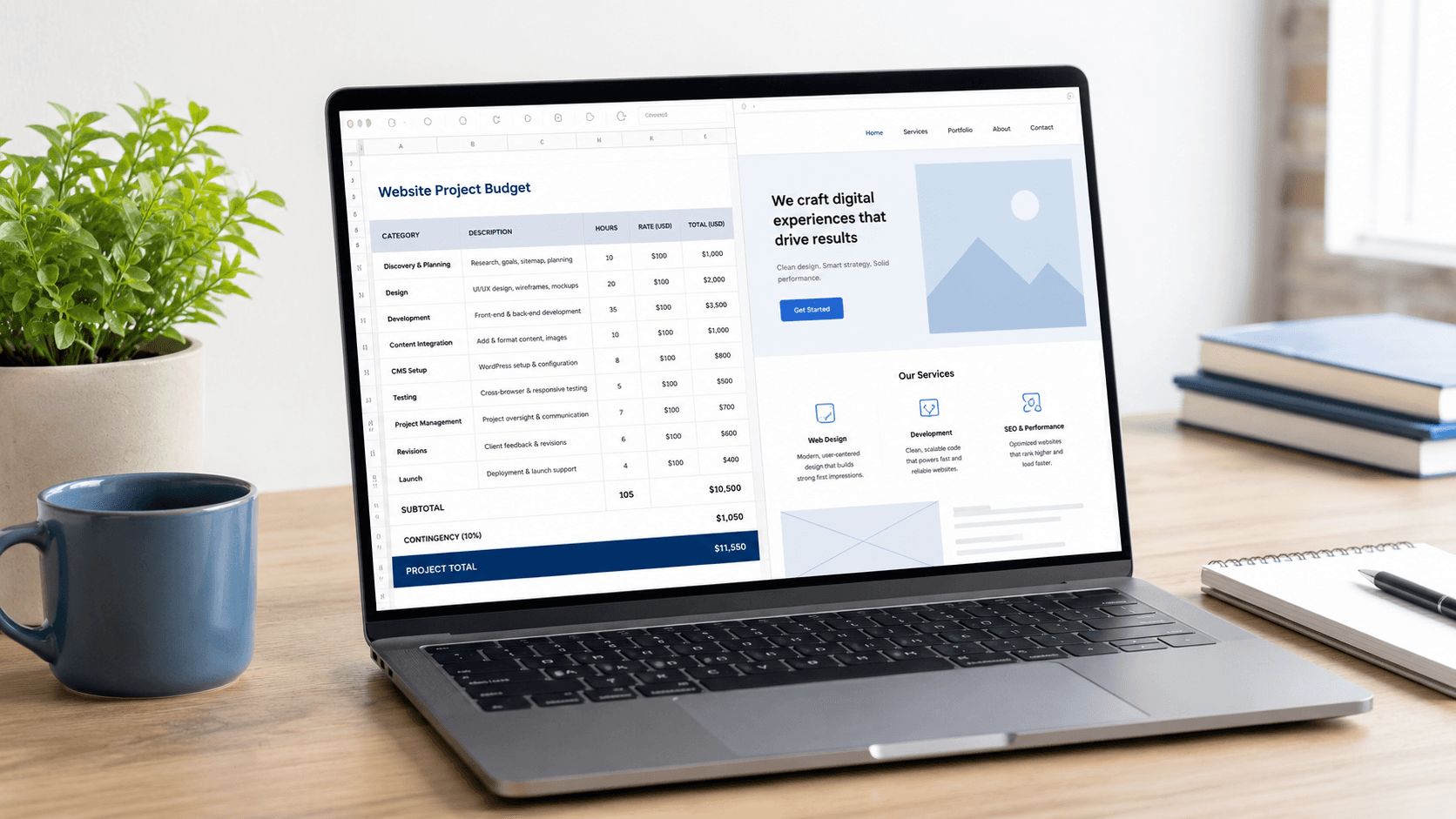
WordPress runs a huge share of the business websites on the internet for a reason. It's mature, well understood, and — when it's built properly, not just assembled from a bloated theme — perfectly capable of a fast, professional site. The real advantages: a large ecosystem of plugins for common needs (bookings, basic e-commerce, forms), a content editor that most business owners can actually use themselves after launch, and a lower starting cost than a fully custom build (for actual numbers, see our website cost breakdown).
The catch: "WordPress" covers everything from a genuinely well-built site to a Frankenstein of stacked plugins that slows to a crawl and breaks every time one of them updates. The platform isn't the risk. How it's built is.
What custom development is actually good for
A custom build makes sense when your business does something WordPress plugins weren't designed for — a booking system with unusual rules, a customer portal, real-time inventory syncing with a warehouse system, anything where "off-the-shelf plus a plugin" starts to feel like forcing a square peg into a round hole. You're paying more because you're building software, not assembling a website, and that's a genuinely different job — short version: yes, it usually costs more, but for the right project it's the cheaper option long-term.
A simple way to decide
Ask yourself: is there a plugin or established pattern that does 80% of what I need? If yes, WordPress (built properly) will almost always get you there faster and cheaper, with the flexibility to add the custom 20% where it actually matters. If your core function is something genuinely unusual to your business — not just "we want it to look different" — custom development is worth the higher cost, because you're not fighting a platform that was never designed for your use case.
The mistake in both directions
Two mistakes show up constantly:
Businesses that need something genuinely custom get sold a WordPress site because it's cheaper to quote, and then spend the next two years fighting plugins that were never meant to do what they're being asked to do.
Businesses that just need a clean, fast, editable brochure site get talked into a custom build they didn't need, at a price and timeline they didn't need either.
Both come from the same root cause: skipping the conversation about what the site actually needs to do, and jumping straight to a platform decision.
What actually matters more than the platform
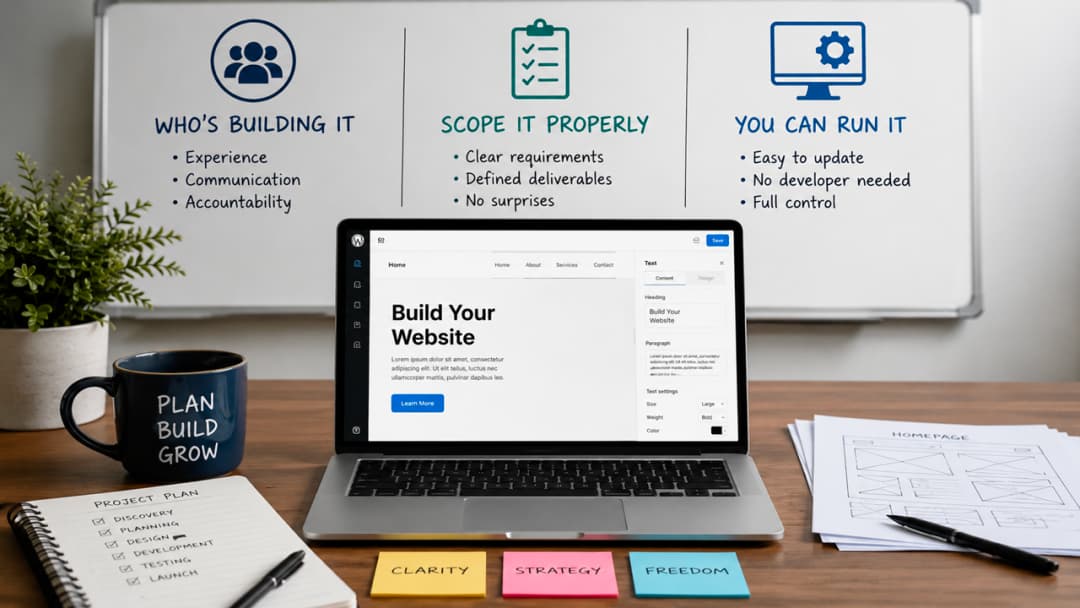
Whichever route you take, the platform matters less than three things: who's building it, whether they scope it properly before writing a line of code, and whether you'll be able to actually run the site yourself once it's live — not stuck calling a developer for every text change. A well-built WordPress site will outperform a poorly planned custom build every time, and vice versa.
Not sure which side of this your business actually falls on? Get in touch — we'll tell you honestly, even if the honest answer is "you don't need what you think you need."